Everyone has a caffeine habit. Coffee before class, an energy drink before a long gaming session, something to get through the afternoon slump. But most people have no idea what caffeine is actually doing to their brain — or why the way you consume it matters just as much as whether you consume it at all.
Caffeine cognitive performance is a well-researched area, and the findings are more nuanced than ‘caffeine makes you focused.’ Understanding the science helps you use it smarter — and avoid the traps that turn a helpful tool into a crutch.
What Caffeine Actually Does to Your Brain
Caffeine works by blocking adenosine receptors. Adenosine is a neurotransmitter that builds up in your brain throughout the day and makes you feel progressively more tired. Caffeine doesn’t give you energy — it blocks the signal that tells your brain it’s running low.
That distinction matters. Caffeine is a suppressor of fatigue signals, not a generator of energy. When the caffeine wears off and adenosine floods back in, you feel the crash — not because caffeine took something from you, but because your brain is finally receiving the messages it had been ignoring.
A comprehensive review published in Neuroscience & Biobehavioral Reviews found that following low to moderate caffeine doses — roughly 40 to 300 mg — alertness, vigilance, attention, and reaction time all improve measurably. Effects on higher-order functions like complex decision-making were less consistent, and heavily dependent on dosage and individual tolerance.
In other words: caffeine makes you sharper and faster at the cognitive tasks that demand sustained attention. It does not necessarily make you smarter or better at creative problem-solving.

The Dose Curve — Why More Is Not Better
One of the most important findings in caffeine cognitive performance research is that the relationship between dose and benefit is not linear. Low to moderate doses sharpen attention. High doses introduce anxiety, jitteriness, and paradoxically impair the same cognitive functions caffeine is supposed to support.
Research using near-infrared spectroscopy found that low-dose caffeine had greater effects on executive function and prefrontal brain activation than moderate or high doses. The prefrontal cortex — the part of your brain responsible for focus, planning, and decision-making — actually responds better to less caffeine, not more.
This is why students who drink three energy drinks to power through finals week often report feeling wired but unable to actually concentrate. The dose has crossed into counterproductive territory. The goal is not maximum stimulation. It is optimal stimulation.
Caffeine and Sustained Attention: Where It Shines
If there is one area where caffeine cognitive performance benefits are most consistent and well-supported, it is sustained attention over time — the kind of focus required for long study sessions, extended gaming, or demanding work shifts.
We have written about this dynamic in the context of academic fatigue: the mental exhaustion that comes from prolonged cognitive effort without adequate recovery. Caffeine helps delay the onset of that fatigue, keeping attention sharper for longer. But it does not eliminate fatigue. It postpones it.
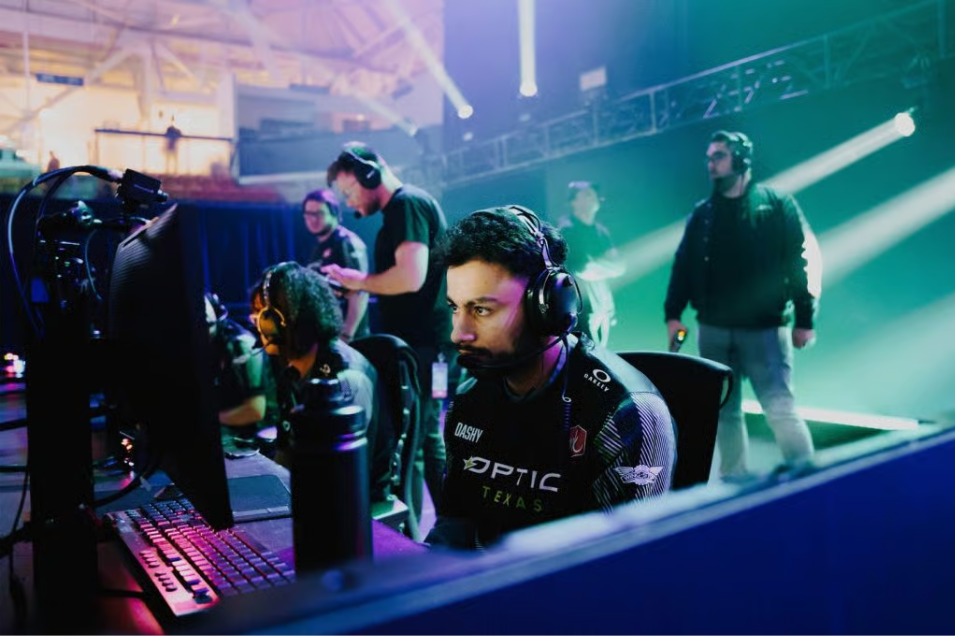
The same applies to competitive gaming. A study published in Scientific Reports found that caffeine supplementation significantly improved Stroop task performance and visual search reaction time in elite esports players — two metrics directly tied to the kind of fast, accurate decision-making that separates good players from great ones.
If you have not read our piece on avoiding burnout and maintaining gaming focus, the research on caffeine and esports performance fits directly into that conversation.

The Delivery Method Gap Nobody Talks About
Most conversations about caffeine cognitive performance focus on how much caffeine you consume. Very few focus on how it enters your system — and that gap matters more than most people realize.
Traditional caffeine delivery — coffee, energy drinks, pills — routes caffeine through your digestive system. Absorption is slow, variable, and tied to what else is in your stomach. That variability is part of why the same cup of coffee hits differently depending on whether you had breakfast.
Inhaled caffeine, delivered in aerosol form directly to the lungs, bypasses the digestive process entirely. Absorption is faster and more immediate, which means you need less caffeine to achieve the same alertness effect — and the experience is more predictable and controllable.
That predictability is a meaningful advantage when you are trying to time a focus window before a study block or a competitive match. You are not guessing when it will kick in.
What Caffeine Cannot Fix
This part is important, and any honest discussion of caffeine cognitive performance has to include it.
Caffeine does not compensate for sleep deprivation over time. Research consistently shows that while caffeine can partially restore alertness in a sleep-deprived person short-term, it does not restore the cognitive deficits that accumulate from chronic poor sleep. Reaction time, working memory, and emotional regulation all degrade with sleep debt in ways caffeine cannot fully reverse.
It also does not fix structural time management problems. If your schedule is disorganized and your workload is unmanageable, caffeine will make you feel more alert inside a broken system. Time management for students is a foundation issue, not a focus issue — and no supplement changes that.
The research on performance anxiety tells the same story. Caffeine at high doses can worsen anxiety symptoms, which directly impairs the cognitive functions you are trying to support. If you are already managing performance pressure — whether in an exam, on stage, or in a tournament — pushing past moderate doses is likely to work against you.
We covered this in depth in our piece on managing performance and anxiety. The cognitive system you are trying to support with caffeine is the same system anxiety degrades. The interaction between the two matters.

How to Use Caffeine Smarter
Based on what the research actually shows, here is what smarter caffeine use looks like in practice:
- Keep doses in the low to moderate range. More caffeine is not more focus — it is more stimulation, which is a different and often counterproductive thing.
- Time it to your work blocks. Caffeine works best when you use it intentionally before a defined focus window, not reactively when you are already distracted or behind.
- Do not stack it on top of poor sleep. Caffeine can help you get through a rough morning. It cannot substitute for consistent rest over time.
- Match the delivery method to your needs. If predictability and speed matter — before a study session, before a match — faster-absorbing formats give you more control over when and how the effect lands.
- Treat it as one layer of a system, not the whole system. Sleep, structure, and stress management are the foundation. Caffeine supports what you have already built.
Final Thoughts
Caffeine cognitive performance is real, well-documented, and genuinely useful — within its actual range of effectiveness. It sharpens attention, speeds reaction time, and extends focus during sustained mental effort. Those benefits are meaningful for students, gamers, and anyone performing under cognitive load.
But the research is also clear on what caffeine does not do. It does not replace sleep. It does not fix a broken schedule. And it does not scale linearly with dose.
Used correctly — at the right dose, at the right time, through a delivery method that gives you control — caffeine is a legitimate performance support tool. Used as a substitute for the basics, it is a way to feel productive while the actual problems compound.
The goal is to show up with everything you have built, intact. Caffeine helps you do that. It is not a replacement for building it in the first place.